
Why Preventative Drain Maintenance Is Essential for Condominium Communities
For Wilson Blanchard’s condominium managers, guiding boards of directors toward a proactive approach to drain maintenance is not just good practice; it is a core part of protecting the communities we manage.
Condominium buildings run on shared systems, tight reserve fund planning, and drainage infrastructure that serves dozens or hundreds of units through common stacks, laterals, and mechanical rooms. When something goes wrong with a drain, it rarely stays contained to one unit. A backup in a shared line can affect multiple owners at once, disrupt common areas, and turn into exactly the kind of unplanned expense boards work hard to avoid.
Despite this, drain maintenance is one of the most commonly overlooked items in a building’s operating plan. It’s easy to deprioritize a system that’s out of sight until the day it backs up into a ground-floor unit or parking garage drain.
Building a preventative drain maintenance program into a condominium’s operating calendar isn’t just about avoiding a mess; it’s about protecting owners, supporting sound reserve fund planning, and safeguarding the value of the property the board has been entrusted to manage.
The Real Cost of Reactive Drain Maintenance
When a drain fails, the costs go far beyond a plumber’s invoice. A single blocked drain in a condominium building can trigger a cascade of problems: water backups into units, damaged flooring and drywall on common elements and in units, the growth of mould, and in severe cases, an emergency special assessment to cover damage that a routine maintenance program could have prevented.
Under Ontario’s Condominium Act, boards have a duty to maintain and repair the common elements, and property managers play a central role in helping boards meet that obligation. A preventable drain failure that damages units or common areas can expose the corporation to costly emergency repairs, insurance deductible increases, and disputes with owners over responsibility for damages; all of which can dwarf the modest investment of a routine drain maintenance program.
Older buildings in a portfolio are especially at risk, often running original clay or cast-iron drainage systems that are particularly susceptible to root intrusion, scale buildup, and joint deterioration decades after installation. Waiting for a failure in these systems is a risk no board or community can afford.
What Preventative Drain Care Actually Looks Like
A preventative drain maintenance program doesn’t need to be complex. For most condominium buildings, it involves three core components:
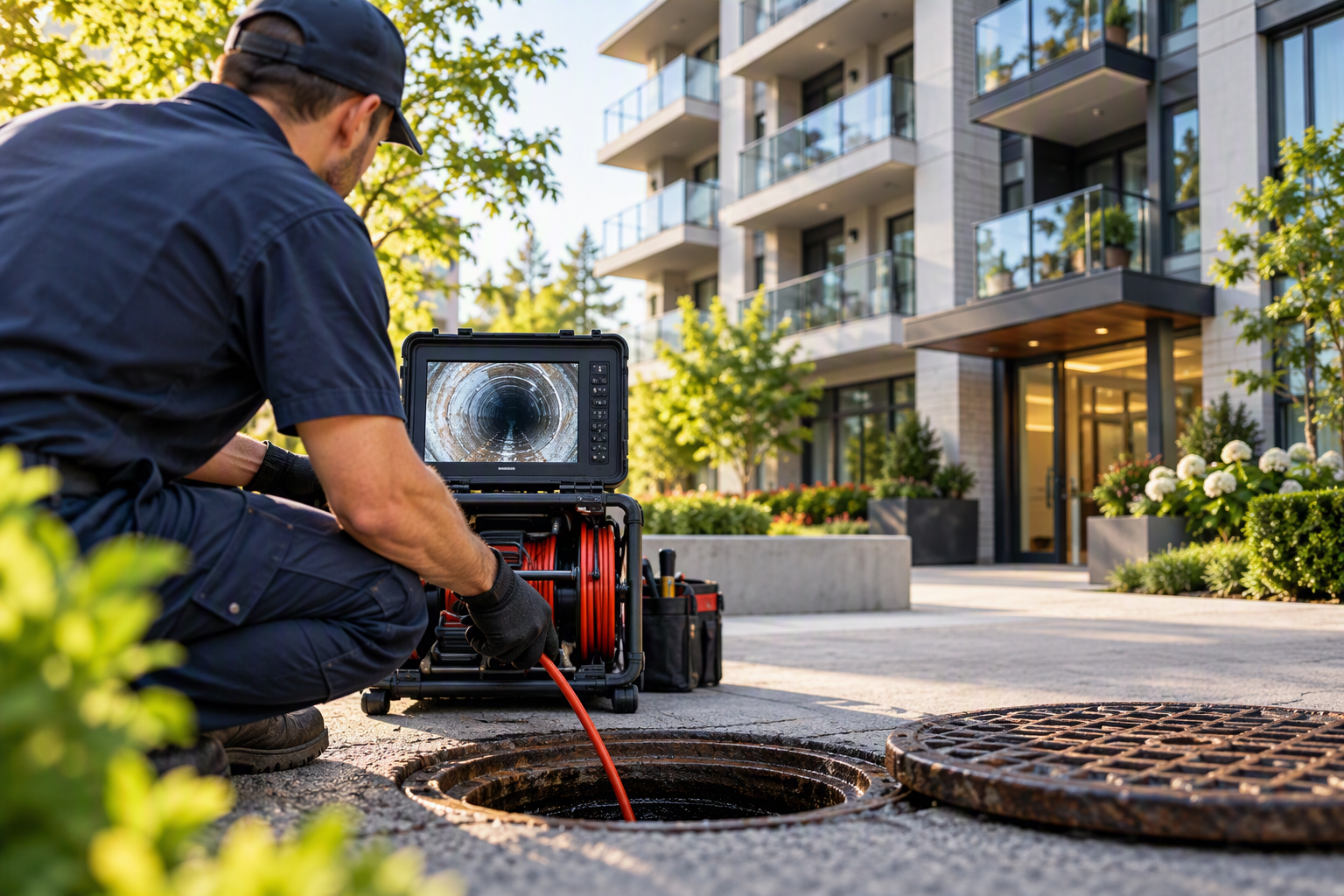
Regular Inspections – Annual or biannual CCTV drain inspections allow property managers to see exactly what is happening inside pipes before a blockage becomes a backup. Camera inspections can identify root intrusion, buildup, pipe cracks, and misaligned joints, giving boards the information they need to plan capital repairs through the reserve fund rather than through an emergency special assessment.
Scheduled Cleaning – Hydro-jetting and mechanical drain cleaning on a set schedule removes buildup before it restricts flow. In buildings with shared amenities like laundry rooms or party rooms, quarterly cleaning of high-use lines is a practical standard. For main stacks and lateral lines, an annual flush is typically sufficient.
Owner Education – A significant portion of drain blockages in condominiums originate with owner behaviour; flushing wipes, disposing of cooking grease down sinks, or overloading garbage disposals.
Simple, clear communication through the board or property manager, at move-in and through seasonal building notices, can meaningfully reduce the frequency of blockages.
The Financial Case for Proactive Investment
The economics of preventative maintenance are straightforward. A routine drain inspection and cleaning for a typical mid-rise building might cost a few hundred to a couple thousand dollars annually. An emergency drain failure, followed by water damage remediation, mould abatement, and a special assessment or reserve fund draw, can easily reach into the tens of thousands per instance.
Beyond direct repair costs, preventative maintenance protects property value and supports the accuracy of reserve fund studies. Buildings with documented maintenance records give boards and engineers better data for long-term capital planning, and give prospective buyers and their status certificate reviewers confidence in how the building has been managed.
Some insurance policies also reduce or deny coverage for losses arising from neglected maintenance, making proactive drain care a matter of risk management as much as property stewardship.
Across a portfolio, a scheduled maintenance contract with a trusted drain and plumbing specialist can also reduce per-service costs and ensure consistent, documented service records for boards, auditors, and reserve fund planners alike.
Partnering With the Right Professionals
Not all drain service providers are equal. When recommending a contractor for preventative drain maintenance, look for companies with experience in condominium and multi-unit buildings, familiarity with the drainage configurations common in older building stock, and the ability to provide written inspection reports and CCTV footage that boards can reference in reserve fund planning.
Establishing a relationship with a trusted provider before an emergency occurs means faster response times when urgent issues do arise and a contractor who already knows a building’s systems.
A Simple Step With Significant Returns
Managing a condominium community means balancing dozens of competing priorities on behalf of the board. Drain care rarely feels urgent until it is. Building a simple, consistent preventative maintenance program into a building’s annual operating plan helps protect owners, supports well-informed boards, and safeguards the property.
Prepared by Aqua Fast Flush
Contributed by Jonathan Heeg, CEO

About Aqua Fast Flush
Ontario-based industrial services company specializing in preventative drain maintenance for food processing facilities and commercial operations. With more than 36 years of experience in industrial maintenance, food safety infrastructure, and operational reliability, AFF helps organizations reduce risk, maintain compliance, and prevent costly disruptions. He is known for his systems-driven approach, emphasizing preventative maintenance, safety, accountability, and long-term operational performance in critical production environments.